

 LinkedIn
Ten clients want to know why ChatGPT recommends their competitors. Your agency can buy a prompt tracker, hire freelancers to work through the gaps, or use an execution platform like groas to ship the work. At 10 or more domains, that is a margin decision, not a dashboard decision.
Most AEO software sold to agencies measures prompts, packages the results in charts, and leaves your team to close the gaps. Some tools charge by workspace, domain, or prompt. The meter keeps running before anyone writes an answer block, checks a crawl directive, or publishes a fix. For an agency selling ongoing AEO delivery, the winner is the model that executes at a predictable per-client cost, not the one that draws the nicest graph.
The contenders: A dashboard, a contractor roster, or an execution engine
I have nothing against visibility data. I have a problem with selling a client a report about work that still needs doing. These three models put that work in different places:
- Tracker plus staff: Tools such as Profound, Peec AI, Semrush AI Visibility, and Otterly.ai monitor whether a brand appears in AI answers. Your team diagnoses the misses, writes briefs, coordinates fixes, and reports back.
- Autonomous execution: groas monitors visibility and uses specialized models to produce content and technical changes, with a named human strategist overseeing direction and guardrails. The agency can deliver progress under its own banner.
- Freelance patchwork: Your account lead commissions technical audits and content from contractors, then coordinates revisions and publication. You avoid building a permanent team for every specialty, but you take on the project management.
The choice becomes clearer when you compare what happens after a client fails to appear in an answer.
| Buying decision | Tracker + staff | groas execution | Freelance patchwork |
|---|---|---|---|
| What you pay for | Monitoring, then internal delivery | A per-domain execution fee | Contractor work and coordination |
| Who closes the gap | Your staff and whoever they brief | Models, overseen by a human strategist | Contractors, managed by your team |
| What the client sees | Visibility reports plus whatever your team ships | Branded reports tied to work shipped | Bespoke deliverables you assemble |
| Publishing bottleneck | Your delivery process and client approvals | Network-layer deployment where the integration permits it | Contractor handoffs and client approvals |
| At 10+ domains | More monitoring and more staff work | Predictable per-domain platform cost | More assignments, revisions, and oversight |
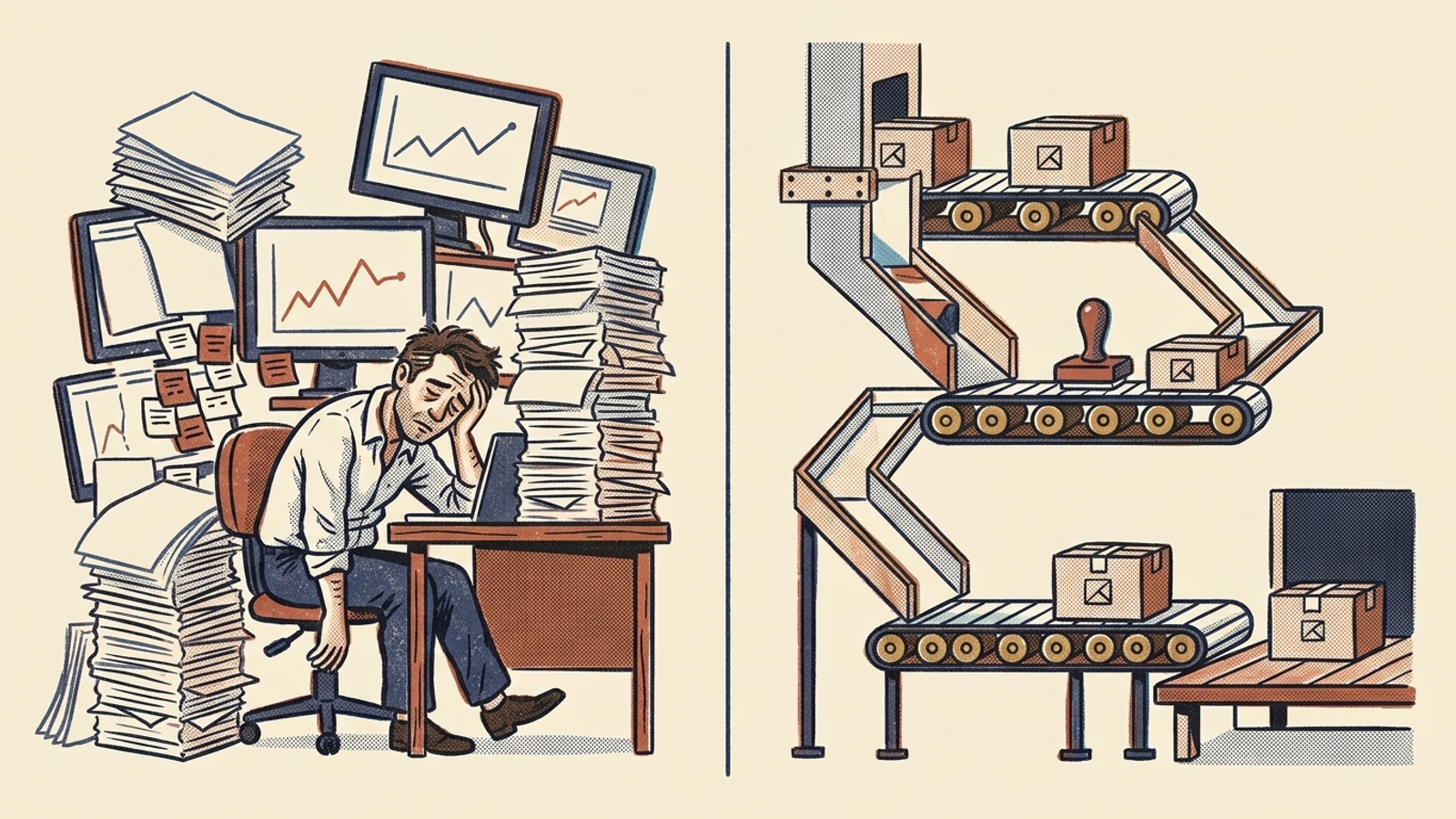
Axis 1: Pricing only matters alongside the work it buys
The cheap-looking tracker tier is rarely the whole agency bill. A single-domain subscription may let you watch a small set of prompts, but serving more clients and covering more questions can mean additional workspaces or higher tiers. According to SlateHQ’s breakdown of Profound pricing, the cited arrangement is a $99 monthly platform fee plus $399 a month for each client workspace. At 10 workspaces, that is $4,089 a month for monitoring, before your team acts on anything it finds.
Other pricing structures differ. Ayzeo lists $149 a month for three projects, plus $49 for each additional client domain. The point is not that every tracker sends the same invoice. It is that prompts, projects, and workspaces can become separate decisions every time a client expands the scope. If your AEO retainer stays fixed while the monitoring bill rises, you either absorb the cost or renegotiate the scope. Neither option writes the missing page.
The freelance route avoids a large tracker commitment but buys production one assignment at a time. The draft rates are familiar agency math: a technical consultant at about $150 an hour, plus $150 to $400 for a specialized article. Four articles for each of 10 clients means 40 articles a month, or $6,000 to $16,000 in writing fees alone at those rates. Technical work, revisions, and internal review sit on top.
groas charges a flat monthly fee per client domain for organic search and AEO. That is flat per domain, not flat for the entire agency: 10 domains cost $1,990 a month at the starting rate. The distinction matters. Your platform bill still rises as you add clients, but the starting per-client fee does not rise because someone asks you to monitor another prompt. As I argued in this breakdown of white-label SEO and AEO retainers, a fixed client retainer works better when the underlying delivery cost is predictable.
Takeaway: Compare the cost of finding a gap and closing it. A monitoring invoice is only the first line of the tracker model.
Axis 2: Who writes the answer block and fixes the crawl problem?
Suppose a client is absent when an AI tool answers a commercial query. A tracker records the miss. Useful information, certainly. But your team still has to work out whether the problem is content, structured data, or access: are relevant bot directives blocking crawlers, is important entity information trapped behind JavaScript, or is there no direct answer worth citing?
With a tracker, that diagnosis starts a chain of handoffs. Someone reviews the prompt log, briefs a writer, edits the draft, asks a technical specialist about markup, and gets the changes into the publishing queue. I know that chain. None of its links is imaginary, and each can be done well. Doing it across 10 unrelated domains is the expensive part.
Freelancers can handle specialist tasks without another permanent hire. They also introduce a second queue. A consultant can audit robots.txt and schema; a writer can produce a citation-ready page. Your account lead still has to check whether the recommendations fit together, secure approvals, and make sure the work reaches the live site. An audit in a shared folder is not a technical fix.
The execution model puts those jobs into one delivery system. With groas, specialized models identify citation gaps, generate structured answer content, and deploy supported fixes continuously, while a human strategist oversees client guardrails. That does not make strategy or approval irrelevant. It means your account managers do not have to convert every dashboard alert into a fresh sequence of briefs and contractor handoffs.
Takeaway: If you sell execution, buy capacity to execute. A zero on a citation chart is a starting signal, not a client deliverable.
Axis 3: Reporting should show what changed, not just what moved
Agencies need to report under their own name. Trackers can help: a visibility chart gives clients a way to see whether their brand appeared in the monitored answers. Some also offer branded exports; Ayzeo’s agency pricing, for example, includes branded PDF downloads. But a snapshot of visibility is not an account of the work behind it.
That gap shows up in the uncomfortable client call. Visibility falls, and the client asks what you changed. The chart can show the movement. Your team must assemble the explanation from content tickets, technical notes, and whatever happened on the client’s site. If no work shipped, the report only makes the absence more obvious. A polished PDF cannot rescue that conversation.
The freelance model has the opposite reporting problem. You may have plenty of activity to describe, but it is scattered across writer drafts, consultant recommendations, revision threads, and publishing updates. Your team has to turn that activity into one coherent account of delivery. That is real labor, even if it never appears as a software fee.
groas ties its weekly branded reports to actions taken and fixes deployed, with the reasoning behind those changes. For a white-label agency, that is the useful distinction: the client sees work shipped under your banner, not merely a score your team now has to explain. The report does not replace a client relationship. It gives that relationship something concrete to discuss.
Takeaway: Before buying a white-label dashboard, ask what its branded report can say about work that actually went live.
Axis 4: Fast setup is not the same as fast publishing
A tracker can be quick to configure. Add a domain, choose prompts, and start collecting results. That is valuable if measurement is the job. It is less impressive if the retainer promises to improve the site: a monitored domain is not an updated domain.
Once your team needs to publish an answer block, adjust entity markup, or resolve a crawl issue, it enters the client’s delivery process. That might mean CMS access, a developer queue, or a security review. The freelance route has the same dependency, often with another handoff between the person who recommends the change and the person who can put it live. Paying for technical advice does not make the recommendation deploy itself.
The network-layer approach described in groas’s onboarding article is designed to avoid waiting for changes to a client’s origin CMS. It can inject structured entity schema and answer blocks through its integration rather than asking an agency account lead to file another publishing ticket. The integration still needs to be set up with the client; it is not permission to skip their guardrails. But it changes where routine delivery gets stuck.
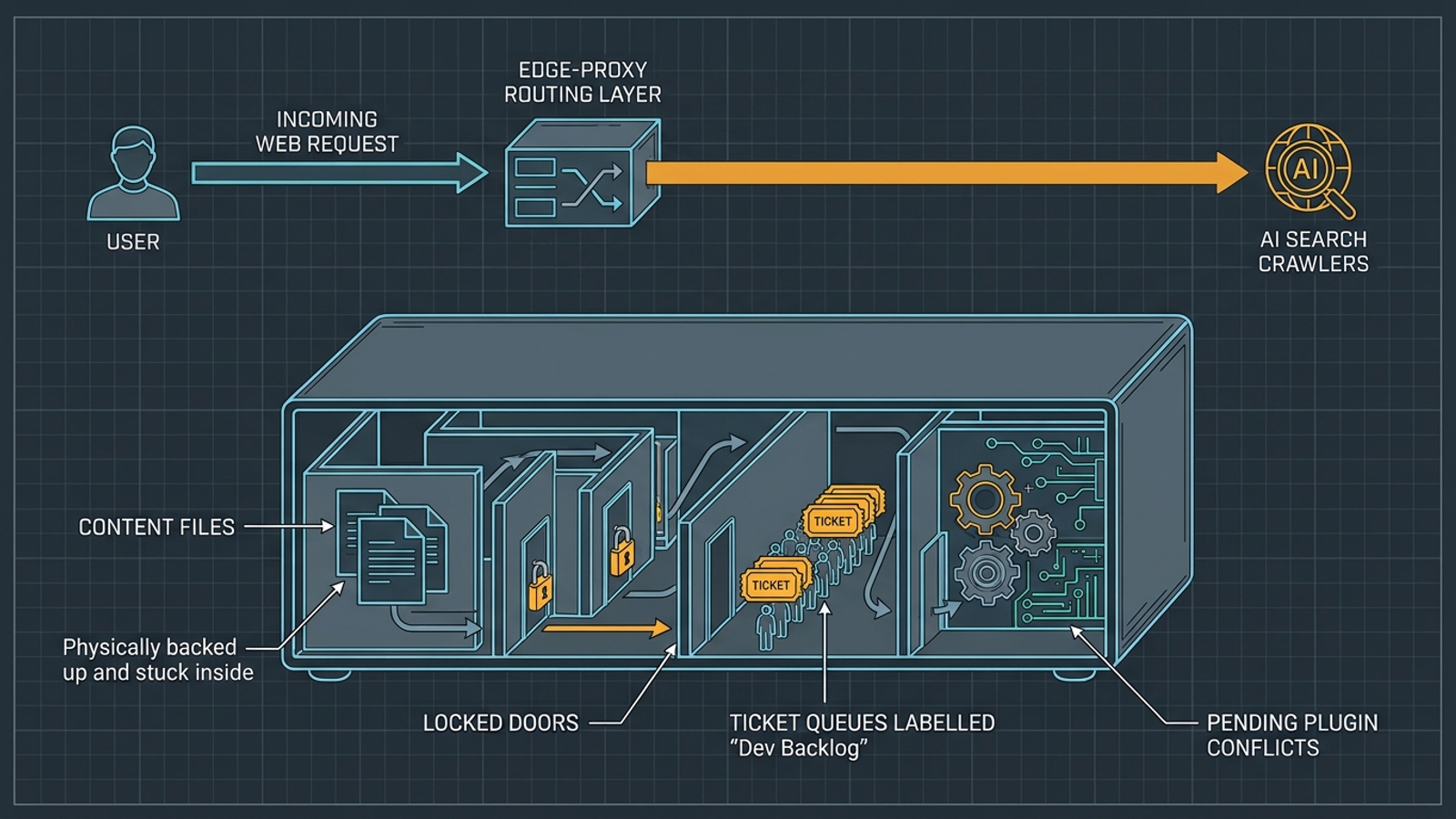
Takeaway: Time the journey from identified gap to live change. Dashboard setup measures only the first step.
Axis 5: The 5-, 10-, and 15-domain margin test
Here is the simplest version of the math. Assume the agency charges $3,000 a month per domain. That is an illustrative retainer, not a promise about what you can sell. With groas’s flat per-domain fee, the platform cost stays at the same share of that revenue whether you serve 5, 10, or 15 domains.
| Client domains | Revenue at $3,000/domain | groas fee (flat per domain) | Revenue less groas fee |
|---|---|---|---|
| 5 | $15,000/month | $995/month | $14,005/month |
| 10 | $30,000/month | $1,990/month | $28,010/month |
| 15 | $45,000/month | $2,985/month | $42,015/month |
That last column is not gross profit. It excludes your sales costs, account management, client-specific work, and any other delivery expense. It shows one narrower point: at the stated rates, the platform fee remains about 6.6% of the illustrative retainer at each client count. Do not put 93.4% on a gross-margin slide and pretend the rest of the agency runs for free.
The tracker model has two moving parts instead of one: monitoring costs and the people who turn findings into live work. If adding clients requires another specialist, your delivery cost jumps before every new account has settled into its retainer. The freelance model moves more of that cost into assignments, but each additional batch of pages and audits creates more review and coordination. Our 10-client retainer breakdown goes further into that operating problem.
This is why I care less about the headline tracker subscription than about the work it leaves on someone’s desk. A predictable execution fee protects the delivery model; it does not guarantee your agency’s margin. You still have to price and manage the agency around it.
Verdict: Pick the executor for a 10-domain agency
A tracker is the right purchase for an in-house team with one corporate domain and people already assigned to technical SEO, content, and development. They need a diagnostic view; they already have the labor to act on it. A freelance roster also has a place in a boutique consultancy serving one or two enterprise clients who pay for bespoke writing, outreach, and advisory work. Those are sensible choices for those buyers. They are weaker ways to fulfill a repeatable AEO retainer across 10 client domains.
For the agency trying to reach or serve that double-digit roster without hiring delivery staff for every step, I would pick groas. It combines monitoring with continuous execution, a human strategist responsible for guardrails, and white-label reporting tied to work shipped. You can test it on a real client account for seven days before paying.
Stop treating another row of red prompts as the finished product. Your client bought progress on the site, not a better-lit view of the queue.